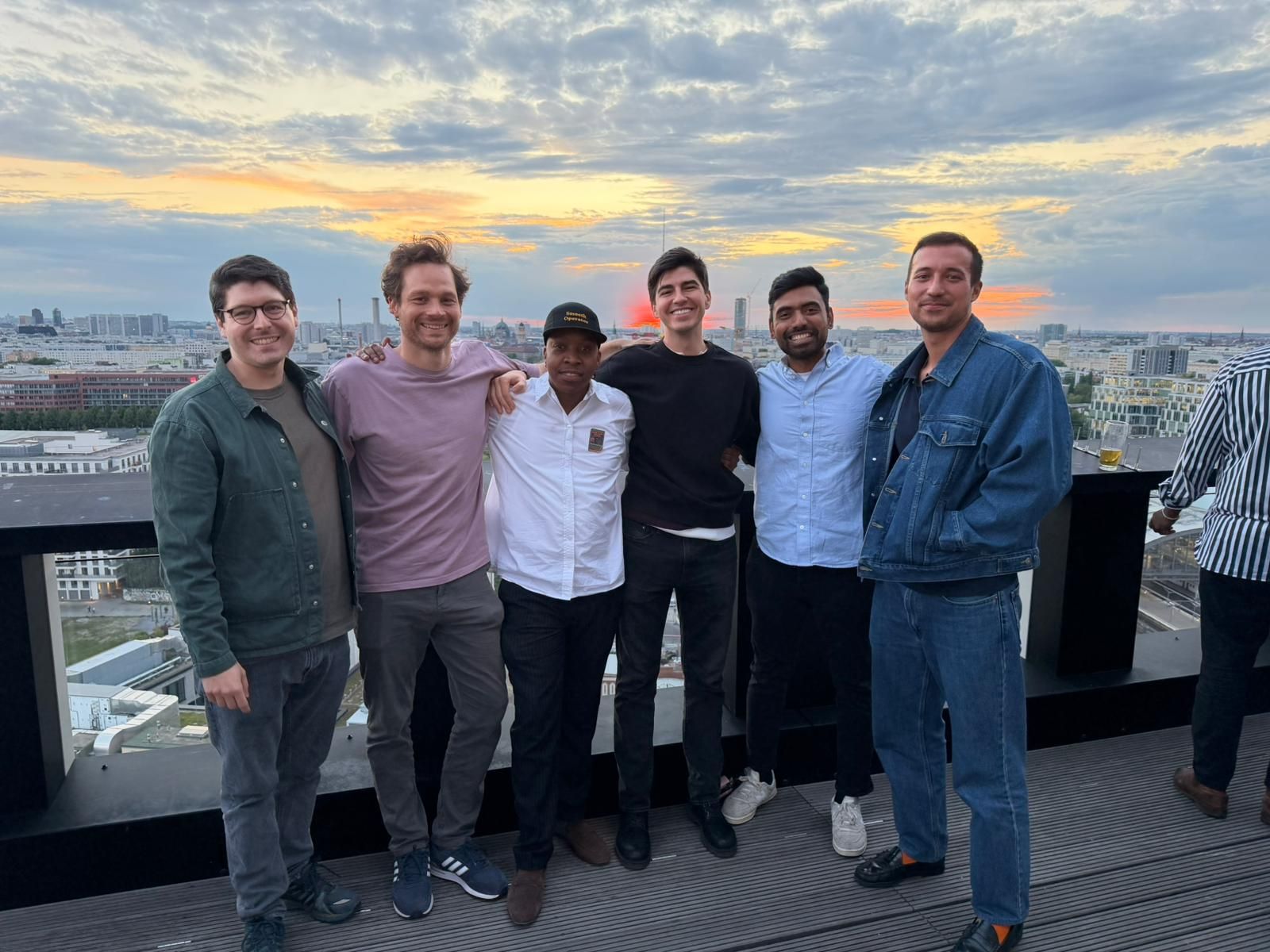
Still thinking about GTM Night — a panel evening featuring HubSpot, Clay, Heyreach, and Checkpoint, hosted at HubSpot's Berlin office and capped off with one of the better sunsets we've seen this year. Good panel discussions tend to leave you with more questions than answers, and this one did exactly that. A few things stuck.
GTM engineering is moving up the stack
AI is changing GTM engineering from the ground up — automated prospecting, enrichment, and personalized outreach at scale are becoming table stakes rather than differentiators. What's shifting is the role itself: less about executing individual workflows, more about designing the systems and making the strategic calls that decide what gets automated and how.
Engineering and strategy are converging
The recurring theme across the evening, and across most conversations about AI right now, was convergence — understanding a client's industry is becoming just as important as technical execution. Knowing how to build the workflow only gets you halfway there; knowing which workflow actually matters for that specific business is the other half.
We're all aiming at a moving target
Right now, most GTM teams are operating in what amounts to no man's land — the tools, the best practices, and the expectations are all shifting at once. That makes integrated systems and adaptable workflows more valuable than any single point solution, because the target itself keeps moving.
Just because you can build it doesn't mean you should
AI has made building easier than it's ever been. That's not the same as making every build a good idea. Large commercial organizations still rely heavily on proven, scalable data infrastructure — the kind that many quickly assembled, "vibe-coded" applications struggle to support once they need to hold up at scale.
Good conversations, good company
Thanks to everyone on the panel for the discussion, and to the organizers for putting together an evening worth reflecting on days later. Conversations like these are exactly why we keep showing up to these events — the insights rarely come from the slides.